ALL CONNECTED
A Sound Portrait of Contemporary Jewish Life in Belgium
Built from forty in-depth recorded interviews, the project explores the diversity of contemporary Jewish life in Belgium through individual voices and personal experiences. The interviews address memory, transmission, identity, family, diaspora, culture, belief and non-belief, artistic creation, political engagement and the transformations of Jewish life in the twenty-first century.
All Connected does not attempt to define a single Jewish identity. It brings together contrasting experiences, intellectual traditions and different ways of belonging. Together, these voices form a living archive of Jewish life in all its diversity.
THE INTERVIEWS
Each interview lasts approximately sixty to ninety minutes and is edited into an individual sound portrait. The participants come from the worlds of art, law, academia, music, cinema, architecture, social activism and communal life.
Being A Levi is something abstract, but experienced through action.
In this extract, Jacques Levi reflects on whether bearing the name Levi amounts to playing a role. For him, Jewish identity is not a performance but a responsibility that is lived through actions and shaped by the way others perceive and pronounce one’s name. Drawing on his experience as a theatre teacher, he connects Jewish identity, theatre and the sacred, describing theatre as meaningful only when it reaches towards the sublime.
the full transcript of the clip
Albert Aniel
"Is being Levi a role?"
Jack Levi
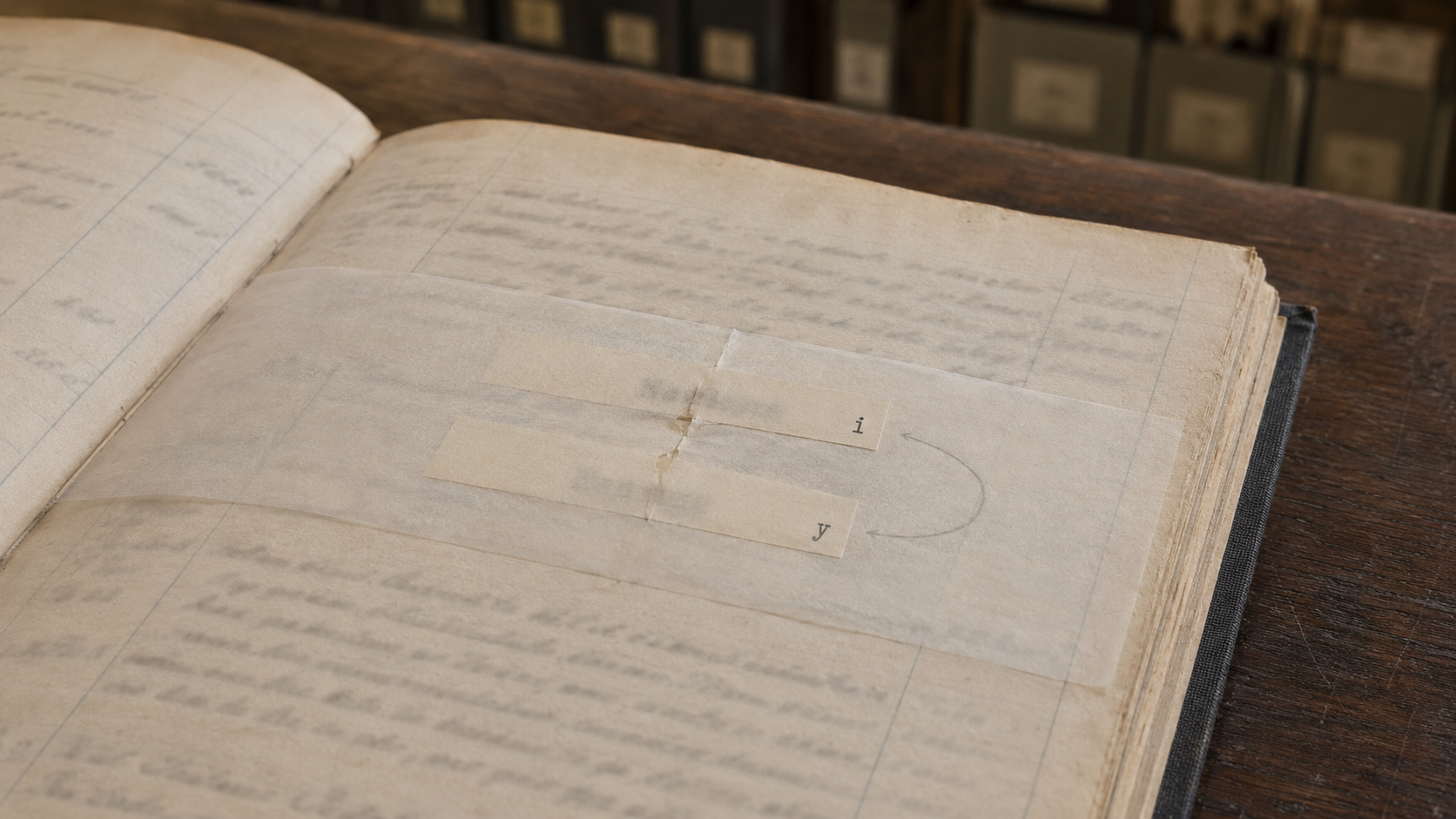
« It’s not a role. I would say, it’s something more abstract, but it’s something that is experienced through actions. Curiously, this is also related to the theatre, which is a system set up by action. To bear this name carries a special responsibility. It’s not a game, in the sense that an actor is playing a role. There’s something heavy about it. And when I say this, what matters above all is how the people around us perceive this name, whether it is written with an "I" or a "y", as well as its pronunciation.
People often pronounce 'Levi' differently. Some Jews, including me, may take offence at this. For complicated reasons, we can get the impression that someone who calls us "Levi" in a certain way has something against the Jews. It is something intangible.
I really liked your introduction and the way you spoke about the sacred, because the vision of the theatre that a Levi has, sitting in front of you, as a theatre teacher, is precisely a vision of the sacred. For me, theatre only makes sense if it possesses a necessarily sublime quality. Either it is sublime or it is not. To echo Shakespeare, this is undoubtedly what he meant by "to be or not to be": either it is sublime, or it is not; whether it belongs to the realm of being, or it is not.
And this is perhaps the most complex thing for me, as a Jewish drama teacher, to convey to non-Jewish people—without judging them, of course—and who may have less sense of the sacred. "
The defining issue of our time
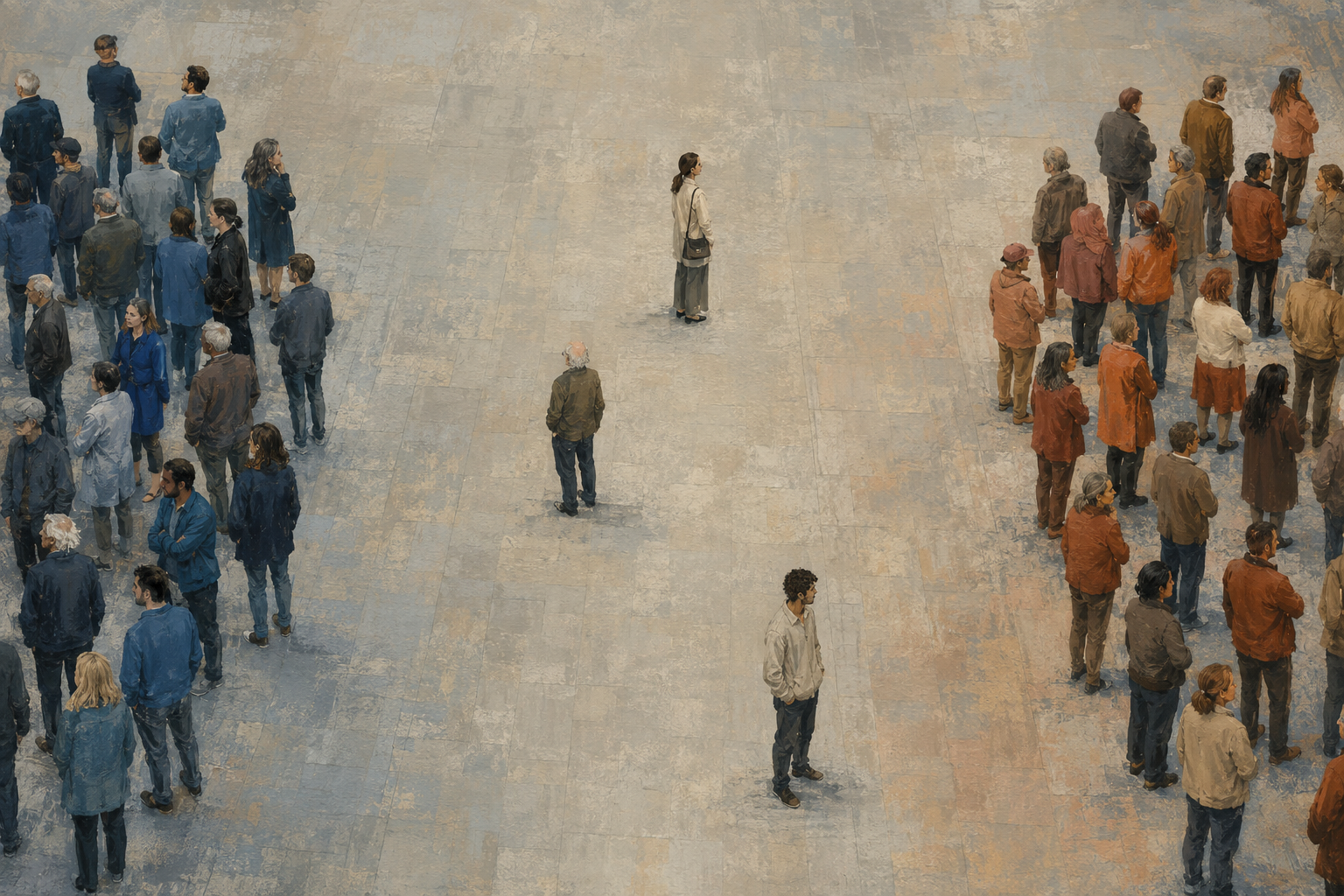
Danielle Perez explains why global crises breed pessimism and examines two disturbing phenomena affecting the Jewish community: traumatic invalidation (denying others' suffering) and traumatic inversion (reversing historical narratives to cast victims as perpetrators).
THE FULL TRANSCRIPT OF THE CLIP
Albert Aniel
Scientifically and economically, there has been progress—not everything is falling apart. On the other hand, it feels like we’re heading toward war. How do you explain this situation?
Danielle Perez
People are afraid. Whether it’s the COVID crisis, the climate crisis, or the wars raging around us, we haven’t heard much positive news suggesting that everything is okay. So we have to look for what is going well, and it’s our own resources and our friendships, our family ties, and our cultural connections that ultimately sustain us and push us toward optimism.
But if we want to remain objective and conduct a dispassionate analysis of the information we receive every day, it still tends to push us toward pessimism rather than optimism. That’s it. And with regard to—I’d like to say—the Jewish community, there are, in addition to the spillover of the Middle East conflict that has existed for years and years, two additional factors that, in my view, have always existed but are now terribly exacerbated and which, personally, frighten me.
These are two elements known as traumatic invalidation and traumatic inversion. Traumatic invalidation denies the suffering of others. So, only my suffering exists, and the other person, in fact, isn’t suffering—or their suffering is meaningless. On October 7, this is what we saw among very young people, and it was truly incomprehensible when posters of babies were being torn down.This is an example of traumatic invalidation. That baby doesn’t exist. It would be a different baby in a different conflict. It exists; it matters. But that one doesn’t exist.
That’s what Jewish feminist movements have highlighted: the rapes. Whether they’re rapes of Jewish women or Israeli women, it doesn’t matter. Other rapes are more important. So, are these proven facts or not? I’m not here to confirm But there’s something that has emerged and is emerging more and more strongly on that side.
The traumatic inversion is even worse. For me, it’s about reappropriating history and inverting it—taking the narrative and turning it on its head. For example, using terms specific to the Holocaust to truly invert the narrative, so that today the victims are portrayed as perpetrators using the exact same terms that were once used to define them as victims. And so this denies any legitimacy and pushes the Jewish community to become increasingly perplexed, to no longer know how to argue their case, and to feel completely estranged from their own history—from their own transmission of history—and forced into a state of constant justification.